
Climate Resilience
Farms and landscapes that withstand a changing climate.
SeSTA works with villages to map their natural resources, plan for floods and droughts, and shift to farming that restores soil, water and trees.
The work, step by step
The Process behind every progress
- 1
Map
INRM and GIS mapping
Villages map land, water, forests and flood zones through GIS-based Integrated Natural Resource Management planning.
- 2
Plan
Village Climate Action Plan
Each village, through bodies such as the VCDC, prepares a plan and submits it to the block as a DPR.
- 3
Adapt
Agroecology and water harvesting
Farmers use bio-inputs, organic manure, soil tests, flood-tolerant seeds, farm ponds, jal kunds and solar energy.
- 4
Restore
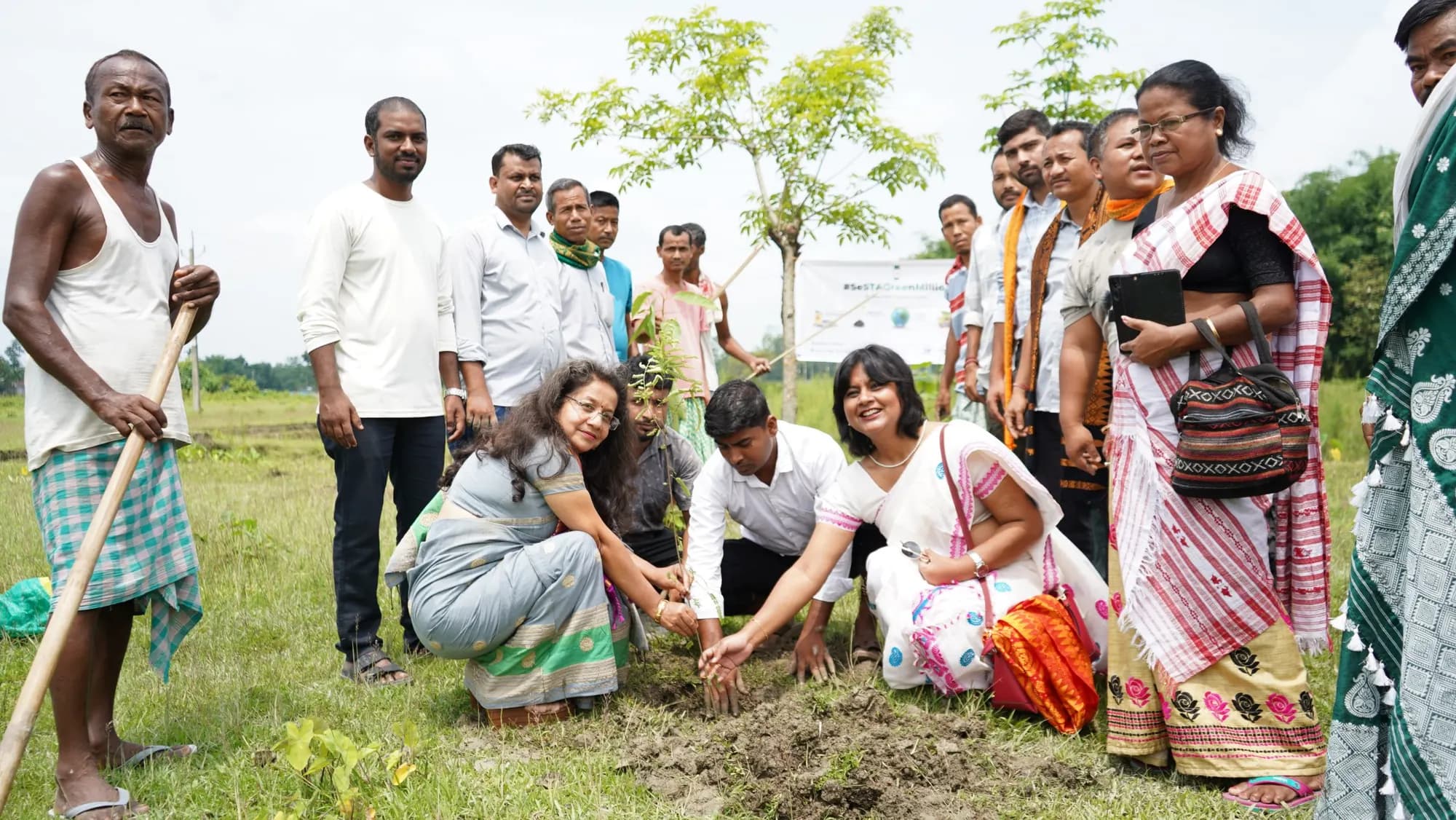
Agroforestry
Degraded and unused land is planted with local fruit and woody species.
Women-led, climate-resilient and low-carbon farming landscapes
In numbers
What the numbers show
Flood response, from states to households
Support reached families across two states in the flood months.
- 2states
- 6districts
- 55villages
- 6,127households
₹34,29,200 in support
Land under agroforestry
Degraded and unused land mapped and planted with local fruit and woody species.
At a glance
Key numbers
- Integrated Natural Resource Management plans
- 121
- villages planned with GIS in Barbari, Baksa
- 58
- farmers using agroecological practices
- 25,181
- farmers in plantation initiatives
- 3,208
- saplings planted in Morigaon and Karbi Anglong
- 24,000
- farmers given soil organic carbon tests
- 1,200
- progressive farmers using solar solutions
- 16
- households reached in flood response
- 6,127
From the field
Stories of change
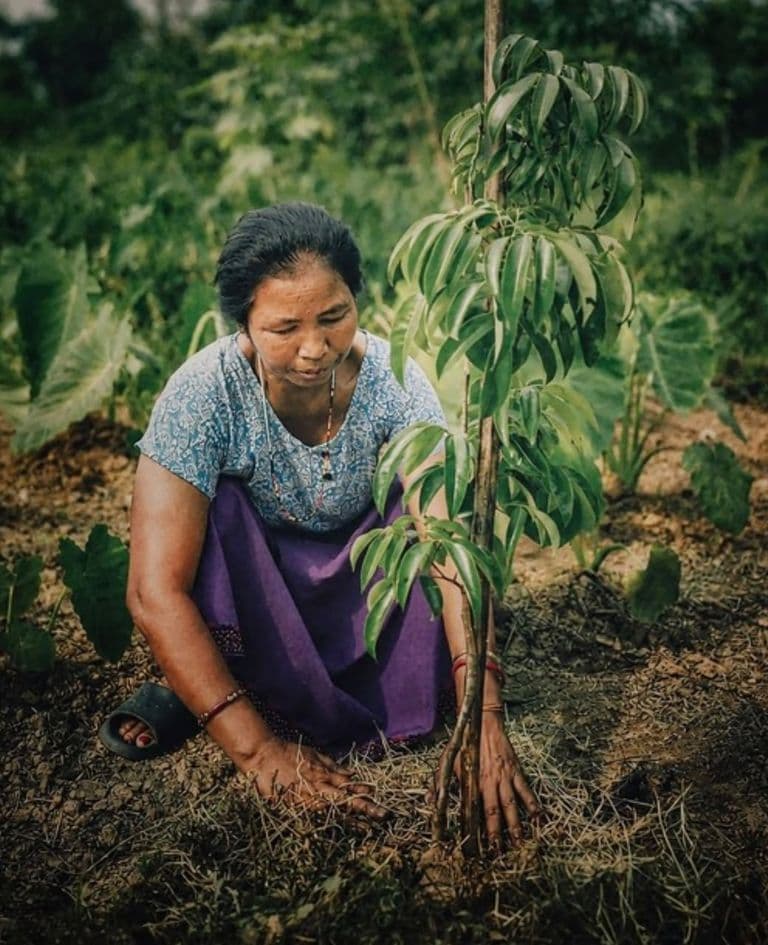
Planting Today for a Tomorrow Yet to Come
Anita Jigdung and her family are planting something whose value will extend far beyond the present.
In Kherbari village, 115 fruit and timber saplings have become the beginning of a long-term commitment to climate-resilient farming. Supported through the NVIDIA-funded Building Resilience to Climate Change project, the family received these saplings under the Agro Horticulture and Agro Forestry initiative.
The journey, however, has not been without challenges. With water scarcity threatening plantation growth, the family turned knowledge into action. Intercropping and mulching became part of their farming practices, helping conserve soil moisture and make better use of limited resources.
Today, Mango, Litchi, Mahogany and Red Sandan are taking root on their land.
There is something quietly powerful about planting trees whose full potential may take years to unfold. It speaks of a willingness to look beyond immediate returns and invest in the future of the land, the family and the generations that follow.
Together
Who makes it happen
- 01Women’s collectives
- 02Field teams
- 03GIS team
- 04Forest Department and MBMA
- 05Selco Foundation